Most English learning platforms are built to keep you coming back, not to make you fluent. Here is why your streak means nothing, and what to use instead.
Hundreds of thousands of learners open an English learning app every morning, tap through a few exercises, and watch their streak climb. The common assumption is: "If I just keep showing up to my English learning app every day, fluency will come, it's only a matter of time and consistency." It feels like progress.
The number goes up. The app sends a congratulatory notification. But six months later, a native speaker says something at normal speed and the learner's mind goes blank.
That gap between activity and ability is not a motivation problem. It is a measurement problem. See our learn Spanish for how this works in practice.
The platforms most people trust when they search for the best websites to learn English are built around one goal: keeping you coming back. Engagement metrics drive their product decisions, not conversational output. Understanding why that distinction matters is the first step toward choosing something that actually moves the needle.
Research by Stephen Krashen on comprehensible input shows that language acquisition happens when learners process meaningful, context-rich content slightly above their current level, not when they complete isolated translation drills. Gamified platforms are technically impressive. But their core loop rewards the login, not the comprehension.
Industry data from app analytics firms consistently shows average language app sessions are notably short, well below the session length most structured platforms are designed around. The mismatch is structural. The platform expects a study block.
The learner has a commute.

The mechanism that moves a learner from completing drills to speaking spontaneously is comprehensible input delivered in real context, repeated across enough exposure that the brain internalizes patterns without conscious effort. Points and badges do not produce that. They produce the habit of opening the app.
The mechanism that moves a learner from completing drills to speaking spontaneously is comprehensible input delivered in real context, repeated across enough exposure that the brain internalizes patterns without conscious effort. The problem is not that popular platforms are poorly built.
The problem is what they optimize for, and what that choice quietly costs you every week you stay on the wrong one.
Key takeaways
Most 'best websites to learn English' lists sort platforms by feature count and price, neither of which predicts whether you'll actually acquire the language.
A daily streak is not the same as progress. Gamified apps build the habit of opening an app, not the habit of thinking in English.
Coursera English specializations have roughly a 10% completion rate, meaning structured course platforms fail nine out of ten learners before the certificate.
Scripted ESL audio slows everything down so much that your ear never learns to decode real spoken English at native speed.
The time most learners need already exists, commutes, waiting rooms, gaps between meetings, but the platforms that demand a cleared 30-minute block burn through it before anything sticks.
Comprehensible input pitched just above your current level (Krashen's i+1) is the mechanism behind real acquisition, and almost no mainstream platform is built around it.
Parrot's short-form video feed closes that gap: a TikTok-style stream of native Spanish speakers delivering comprehensible input in clips short enough to fit any gap you already have.
The Hidden Cost of Picking the Wrong English Learning Platform
That cost shows up most clearly in a single statistic: across platform analyses and second-language acquisition studies, researchers consistently find that only a small minority of learners who begin a gamified language course ever reach conversational fluency, a pattern that holds whether you look at independent academic work or aggregate user outcomes.
A second, quieter cost compounds the first: most language platforms look identical from the outside, all claiming live lessons, expert tutors, speaking practice, and personalized plans.

Duolingo Builds a Daily Habit But Not Necessarily a Speaking Habit
It is effective at what it was designed for: getting beginners to show up every day and building a foundation of vocabulary and reading comprehension through short, structured drills.
This is precisely the gap Parrot was built to close. Rather than drilling textbook phrases, Parrot uses the Comprehensible Input Method, sequencing real, conversational Spanish from native speakers in a short-form video feed, so what you're absorbing reflects how the language is actually spoken, not how it appears in an exercise bank.
After a placement test calibrates your starting point, Parrot's AI Spanish Tutor layers in personalized feedback and targeted practice, during or after video sessions, whenever passive watching isn't enough and you want to test what you've absorbed.
The Scrolling Hours No Best-Sites List Accounts For
No ranking list evaluates platforms by how well they fit inside that existing scroll behavior.
2 hours and 23 minutes
average daily social media scrolling time
Because Parrot delivers comprehensible input through a short-form video feed, those fragmented windows become usable.
Related Reading
How To Learn English
How To Learn English Grammar Step By Step
Is Learning English Hard
Where Should I Start If I Want To Learn English?
English For Tourism
How To Improve English Speaking Skills
How To Improve English Vocabulary
How To Improve English Pronunciation
How To Speak English Fluently And Confidently
English Language Learning Methods
Best Online English Courses
How to Choose the Best Website to Learn English for Your Actual Life
The right platform, in other words, must synthesize convenience with genuine acquisition. That synthesis is the real criterion for choosing an English learning platform: not whether it fits a scheduled 30-minute session, but whether it converts the scrolling minutes that already exist in your day into the kind of rich, context-driven exposure your brain actually acquires language from.

The average person already spends over two hours a day scrolling social media, and research shows that passive screen exposure alone does not build language skills. Active, meaningful engagement with the content is what separates time spent from time invested.
The Three-Filter Test Every Busy Learner Should Run Before Committing to a Platform
Session-length fit comes first. What triggers acquisition is meaningful, comprehensible input that sits slightly above the learner's current level, the i+1 principle grounded in Stephen Krashen's input hypothesis research, one of the most replicated findings in second-language acquisition. A platform that delivers that input only inside a 25-minute structured module fails the first filter immediately, because most learners cannot protect that block.
Method fit comes second. Comprehensible input, the method grounded in Stephen Krashen's acquisition research, consistently outperforms grammar-drill approaches for building conversational fluency. If a platform's core loop is still flashcard memorization or isolated grammar drills, it is likely to stall once you move past the beginner stage.
Tool fit comes third. Parrot's comprehensible input method is built specifically for learners who have hit that wall with memorization-based tools and want a research-backed alternative.
Free vs Paid English Learning Sites - What the Price Gap Actually Buys You
Free platforms can carry a learner surprisingly far at the beginner level. The honest trade-off: free tiers typically cap output practice and personalization, which matters less at A1–A2 and matters enormously once you need real conversational range. Paid tiers generally close that gap with adaptive feedback, longer sessions, and richer authentic content. If you are above A2 and your goal is conversational fluency rather than reading comprehension, the upgrade is usually worth it.
A1 to C2 - How to Match Your Current English Level to the Right Type of Website
Most adult learners globally sit between A2 and B1 on the CEFR scale, where platform choice has the biggest impact. A1–A2 learners need high-frequency vocabulary in clear context. B1–B2 learners need authentic input with enough scaffolding to make it comprehensible. C1–C2 learners need volume and variety, not structured lessons. If you are unsure of your level, a free CEFR placement test takes under fifteen minutes and immediately narrows which platform type is worth your time.
Once you have run these three filters, the 28 sites ahead sort themselves quickly. The next section applies them immediately, starting with the free platforms that hold up best when your window is 15 minutes or less.
Best Free Websites for Learning English With Daily Practice
Seven free platforms clear the bar for genuine daily English practice. The real filter is whether a site delivers something completable in the gaps between meetings, not something that requires a cleared calendar. That matters because one of the most consistent patterns among beginners is a sharp drop-off in the early weeks: the initial motivation fades, the habit has not yet set, and without a practice loop that is genuinely low-friction, consistency breaks before progress becomes visible.
1. BBC Learning English - Best Free Site for News-Based British English
BBC Learning English earns the top slot for learners who want British English grounded in real news. The 6 Minute English podcast is the clearest example of comprehensible input that fits a commute: one topic, one audio clip, one vocabulary focus, done before the bus stop. The trade-off is output. BBC Learning English delivers excellent listening and reading practice, but it builds no speaking habit on its own. Pair it with something that requires you to produce language, or the input stays passive.
2. VOA Learning English - Slower Speech and Simplified Vocabulary in Real News Context
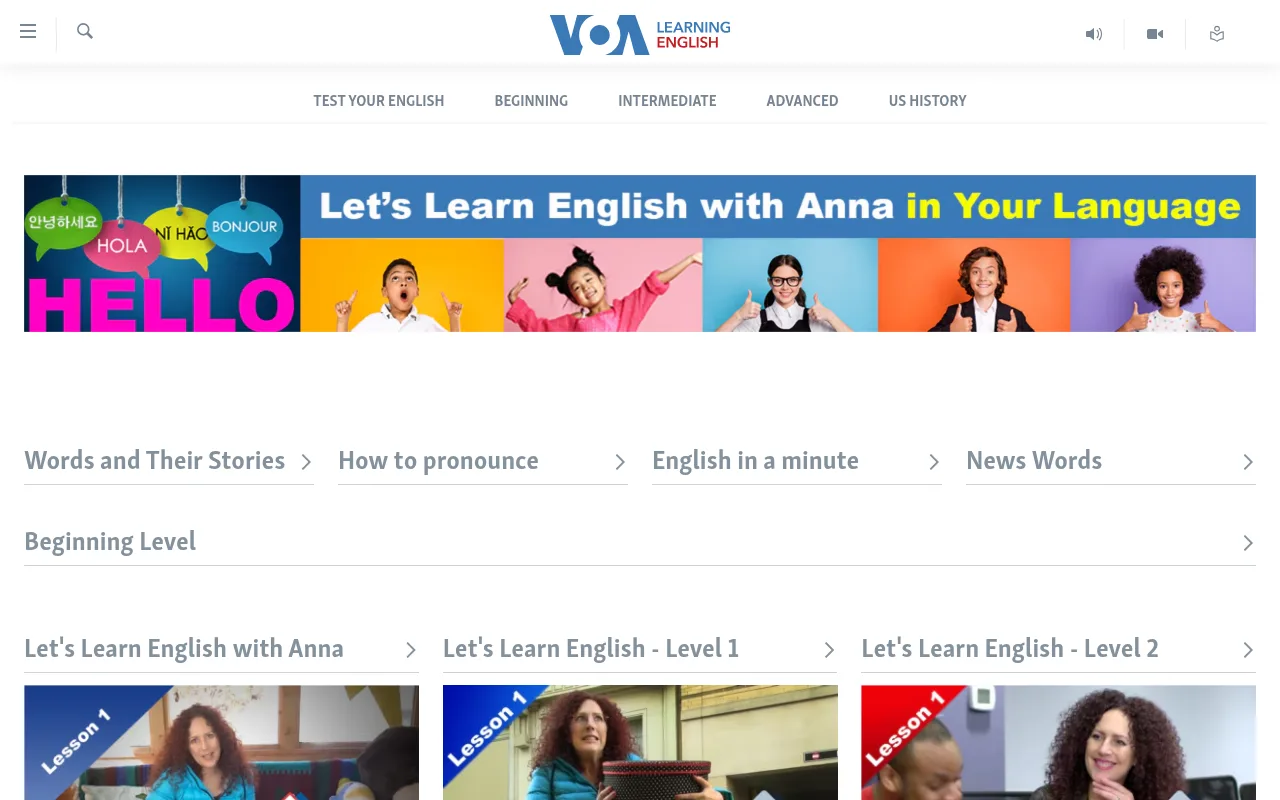
VOA Learning English broadcasts daily news at a deliberately reduced pace, giving learners real-world content without the speed that makes native speech hard to parse. The Special English format uses a controlled vocabulary and slower delivery, making it one of the most research-consistent free tools for beginners and low-intermediate learners. The limitation is naturalness: the simplified speech eventually starts to feel artificial, and the step up to native-speed audio can feel abrupt without a bridge.
3. ManyThings.org - Zero-Cost ESL Quizzes, Word Games, Idioms, and Listening Flashcards
ManyThings.org is completely free with no paywall or premium tier, which matters more than it sounds when most recommended sites gate their best content. The site covers idioms, word games, pronunciation pairs, and listening exercises in short, self-contained units. It is best used as a targeted drill for a specific gap, a confusing idiom, a minimal pair that keeps tripping you up, rather than a daily anchor. It is not built for immersive input, but for the learner who wants a five-minute vocabulary fix, nothing else at this price comes close.
4. British Council LearnEnglish - Free Self-Study Packs for Grammar and Workplace English
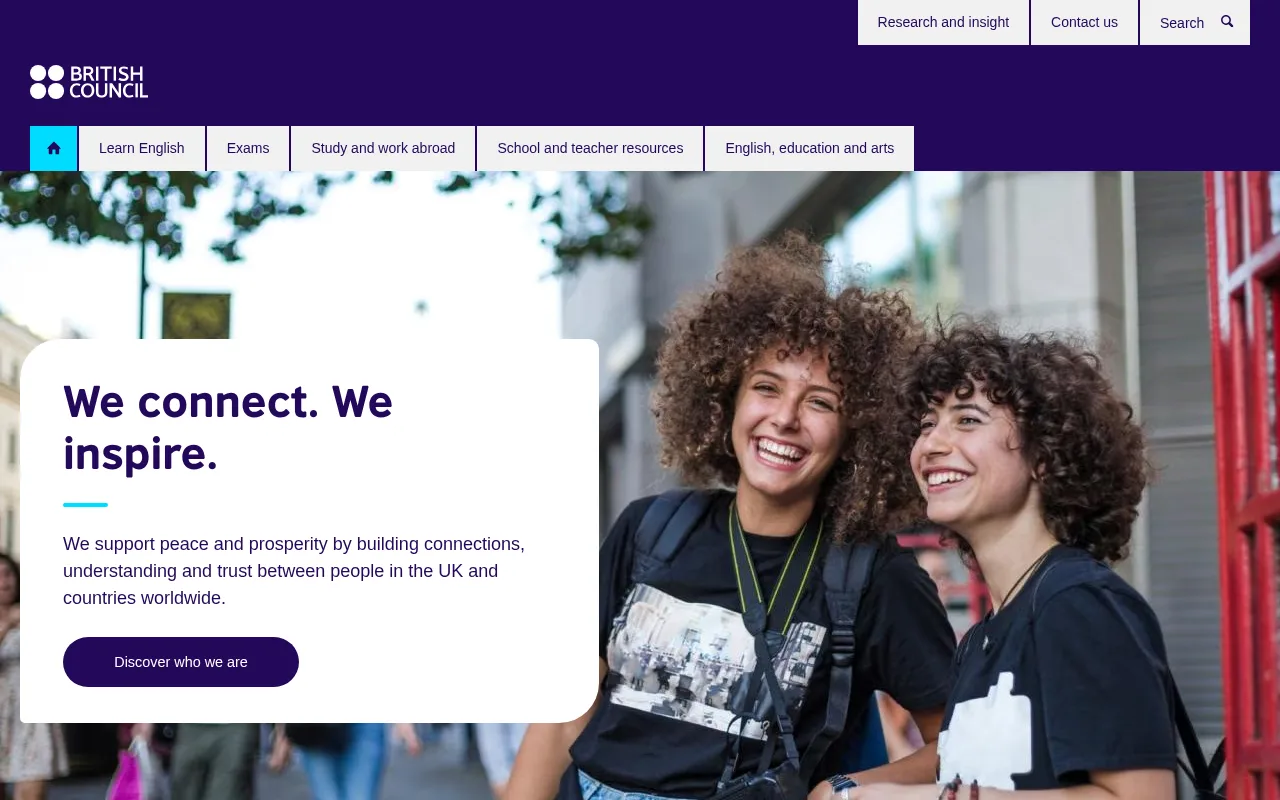
The British Council LearnEnglish platform offers structured self-study packs covering grammar, workplace English, and reading comprehension, all free at the self-study level. The content is well-sequenced and credible, and the grammar explanations are among the clearest available without a tutor. The honest trade-off: the platform assumes a study mindset. Opening a grammar pack requires a mental context switch that a busy learner in a five-minute gap will often skip. It rewards learners who can schedule a session; it does not work well in fragmented time.
5. Duolingo - Top Recommended App for Gamified Daily English Practice
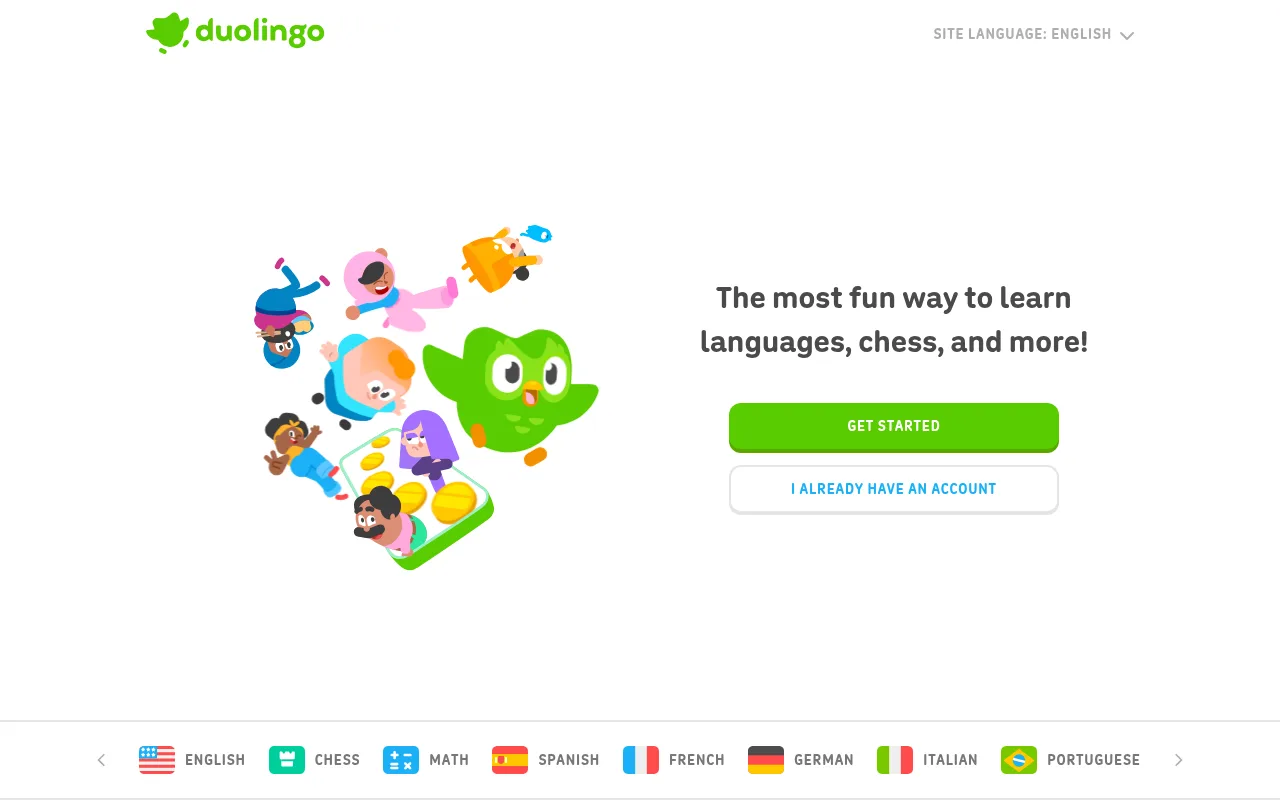
Duolingo is the most widely recommended starting point for building a daily practice habit, and that reputation is genuinely earned: the app's gamification mechanics, streaks, XP, and level badges, are among the most effective free tools available for getting absolute beginners to practise every day. Its vocabulary and reading exercises are well-sequenced and regularly updated, and the interface lowers the barrier to entry about as far as it can go. The honest trade-off is one of scope rather than quality: once a learner's goal shifts from vocabulary exposure to holding an unpredictable real conversation, the platform's core loop, which rewards lesson completion rather than spontaneous production, reaches its natural ceiling.
6. Forvo - Crowd-Sourced Native Speaker Pronunciation Database for Targeted Sound Practice
Forvo hosts an extensive library of pronunciation recordings across a vast number of languages, making it one of the largest crowd-sourced pronunciation databases available for free. For English specifically, the value is in regional variation: you can hear the same word spoken by a speaker from London, Sydney, and Chicago in the same session. The limitation is scope. Forvo is a reference tool, not a practice environment. It answers one question at a time and does nothing to build listening fluency at natural speech speed.
7. Elllo.org - Free Listening Lessons With Natural Conversation Speed for Pronunciation Improvement
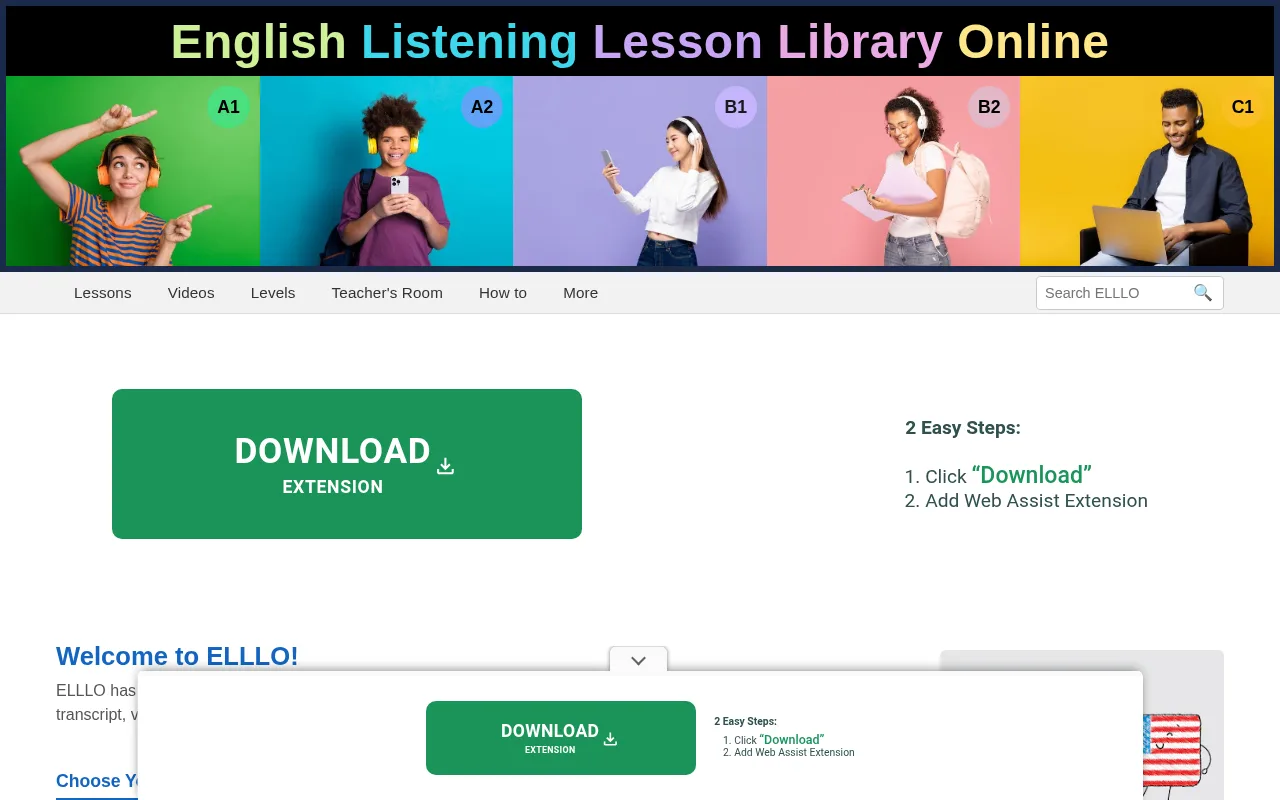
Elllo.org stands out among free sites for one specific reason: the audio is recorded at natural conversation speed, not slowed for learners. That makes it harder than VOA Learning English but more realistic as a bridge toward understanding native speech. Lessons are short, topic-based, and come with transcripts. The site design is dated and the content library has not been updated recently, but for a learner who has outgrown simplified audio and needs exposure to real conversational rhythm, it fills a gap that few free platforms address.
Best Websites for Structured English Courses and Academic Preparation
A very low completion rate is the structural reality of structured English courses online. Coursera specializations have an average completion rate of around 10%, meaning nine out of ten learners who enroll never reach the certificate.

Coursera University-Hosted English Specializations and What You Actually Get
Coursera carries university-hosted English specializations from institutions including the University of Pennsylvania and the University of Queensland, covering Business English, academic writing, and IELTS preparation online, though the credential value varies considerably by employer and context.
British Council LearnEnglish Live Classes and When a Human-Led Schedule Helps
British Council's paid live group classes and tutoring track differ from its free self-study tools in one critical way: accountability, which for many learners is precisely what prevents the drop-off seen in self-paced formats.
Busuu's Native-Speaker Correction Loop as a Lighter Alternative
Busuu's model centers on community members correcting each other's written and spoken submissions. The correction loop is a real, community-scaled mechanism, not a theoretical feature, making it a credible lighter alternative to full university English courses online enrollment for learners who need structured feedback without a six-week time commitment.
It builds accuracy in controlled writing and speaking tasks but is less useful for developing the spontaneous spoken fluency that comes from exposure to unpredictable, native-speed input. Krashen's research establishes that quantity and quality of meaningful, real-world input predicts progress far better than the volume of structured exercises completed, a finding that applies directly to what Busuu's correction loop can and cannot deliver.
Related Reading
How Long Does It Take To Learn English Fluently
Best Apps To Learn English
Types Of Music Good For Learning English
Learning English As A Second Language
English Learning App For Kids
Tof
Game To Learn English
How To Learn English Speaking At Home
English Learning Activities
Best Podcasts For Learning English
Best Websites for English Speaking Practice and Real Conversation
Speaking fluency has one requirement that no amount of listening alone satisfies: you have to open your mouth and produce language under pressure, in real time, with no safety net. Research in second-language acquisition consistently supports the same finding: pronunciation improvement and spoken fluency both depend on active production and real-time feedback, not passive input alone, a conclusion grounded in Merrill Swain's Output Hypothesis and replicated across multiple studies in the field. The platforms below are ranked by how hard they force that output, not by how many features they offer.
"I struggle to find patient, available conversation partners for daily English speaking practice. It's a gap that websites built for real conversation could really fill."
— what we hear from English language learners
1. HelloTalk - Best Free Community Exchange with Native English Speakers
HelloTalk connects English learners with native speakers worldwide through text, voice, and video messaging, making it the strongest free option for daily conversation practice. The "Moments" feed lets learners post voice clips and receive corrections from native speakers, which builds both confidence and accuracy. The tradeoff: partner quality varies, and free-tier learners often report off-topic messages or mismatched proficiency levels before finding a reliable exchange partner.
2. Tandem - Structured Conversation Exchange with Optional Tutoring Upgrade
Tandem pairs learners for structured conversation exchange and adds access to vetted tutors when peer practice falls short. That two-layer model suits learners who want the accountability of a scheduled session alongside the flexibility of informal exchanges. The limitation worth noting: the tutor upgrade costs extra, and without it, Tandem's experience is broadly similar to HelloTalk, so the free tier alone rarely justifies switching between the two.
3. Preply - On-Demand Live Tutoring with Certified English Teachers
Preply delivers scheduled, real-time speaking practice with certified English teachers, which self-study apps cannot replicate. Tutors are priced at a premium compared to free options on this list, making it the most expensive option but also the most accountable. It suits learners who need direct pronunciation feedback and a consistent partner, with budget as a secondary concern.
4. Live Online English Classes - What They Deliver That Self-Study Sites Cannot
A common pattern among intermediate learners is consuming large amounts of English content, podcasts, shows, reading, without ever closing the speaking gap. Live classes force output on a schedule, which is precisely what breaks that plateau. The tradeoff is the minimum session length most platforms require, which makes them harder to fit into fragmented days than any app on this list.
5. Speaking Output Practice - Why Producing English Matters More Than Consuming It
Production under pressure is neurologically different from recognition. Merrill Swain's Output Hypothesis, a foundational framework in language acquisition research, established that learners need to produce language to build fluency. Yet many learners, even those living in English-speaking countries at a B1-B2 level, still struggle with spoken fluency despite daily immersion, which is evidence that exposure alone does not close the speaking gap. Immersion loads the ear; it does not force the mouth.
A second obstacle is the loop problem: learners who have spent months shadowing audio, memorizing sentences, or grinding through drill apps often reach a point where the routine feels productive but real-world speaking improvement is invisible. That stall happens because drills are engineered to remove unpredictability, and real conversation is nothing but unpredictability. Conversation platforms like HelloTalk and Tandem reintroduce that variable, a human who does not give you the answer, which is exactly the pressure production requires.
There is also a quieter barrier that rarely gets named directly: for introverted learners, the social cost of practicing with a real person can feel genuinely exhausting, which pushes them toward AI tools or solo apps rather than live interaction. That is a legitimate preference, and the best speaking workflow accounts for it rather than demanding that every session involve a stranger on a video call.
This is where Parrot's Parrot Back speaking practice feature addresses a structural gap in the toolkit. Parrot Back is most valuable once a learner has built baseline comprehension and is ready to begin producing spoken language, the precise moment when shadowing alone stops working and real output is needed. Rather than requiring a live partner, it lets learners practise speaking confidently using content drawn from real native speakers, building the rhythm and response speed that live conversation demands. The metric that matters is minutes spent producing language while something waits for your response, and Parrot Back is built around exactly that constraint.
6. Pronunciation Improvement Resources - Targeted Tools for Accent Clarity and Intelligibility
Most learners who struggle with pronunciation are missing the rhythm, contractions, and connected speech that native speakers compress naturally. Targeted tools help, but they work fastest when a learner has already absorbed real-world speech patterns. This is where Parrot's short-form video feed closes a practical gap: comprehensible input from native speakers, delivered in 60-second clips, loads vocabulary and rhythm into working memory so that when a HelloTalk partner or Preply tutor shows up, the session converts faster rather than stalling on unfamiliar sounds.
The Comprehensible Input Method underlying every video session governs how content is selected and sequenced for each learner, which means the clips a beginner sees are calibrated to be challenging enough to stretch comprehension without shutting it down entirely. Learners who have struggled with traditional memorization-based methods consistently find this sequencing more sustainable, because progress is visible rather than deferred to some future fluency threshold.
Speaking practice closes the production gap, but before you can speak with confidence, your ear has to be trained to catch the real rhythms, contractions, and connected speech that native speakers use. The next section covers the best websites for building that listening foundation through real-world English content, not scripted textbook audio.
Best Websites for Listening Comprehension Using Real-World English Content
Scripted ESL audio is engineered to be easy. That is exactly the problem. When every syllable is slowed down and every sentence is stripped of natural rhythm, your ear never learns to decode the real thing. Linguist Stephen Krashen's comprehensible input research identifies the core mechanism: acquisition happens when you process language pitched just one level above your current ability, what he calls i+1. Sanitized recordings sit so far below that threshold they stop triggering meaningful acquisition entirely.
The gap between "I can read English fine" and "I can't follow a podcast" is one that learners hit hard and hit often. It is an exposure problem. Learners at B1 level in particular often find that reasonable reading and grammar skills do not transfer to listening; native speech speed, connected words, contractions, and reduced forms expose a gap that textbook audio never trained the ear to close. The brain needs repeated contact with authentic speech patterns before listening comprehension clicks. The platforms below are built around that reality.
1. TED Talks - Best for Topic-Driven Authentic Listening with Interactive Transcripts
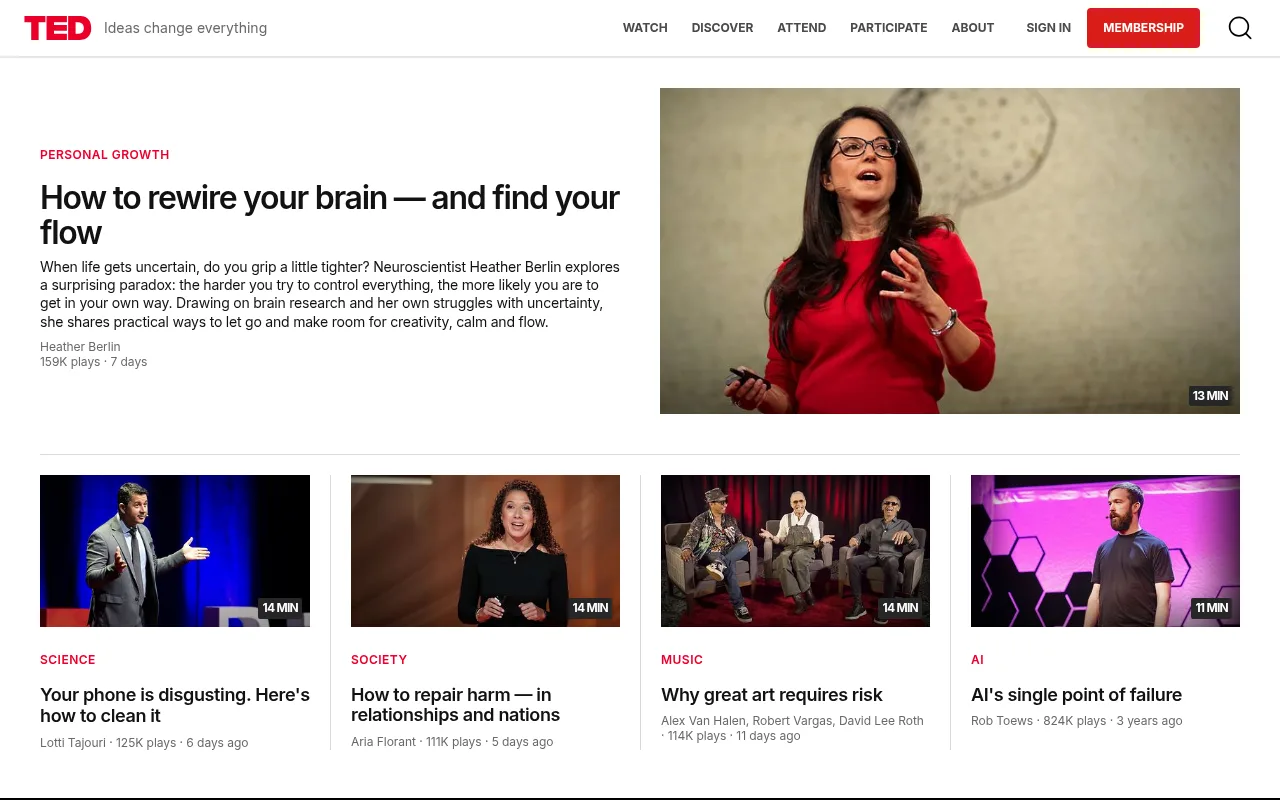
TED Talks is the strongest free entry point for intermediate-to-advanced learners who want authentic listening tied to genuine intellectual content. The library holds over 3,500 talks with interactive transcripts and subtitles across more than 100 languages, so you can read along, click any word, and replay the exact phrase, a workflow that research on subtitle-supported comprehension shows supports the kind of repeated exposure needed to internalize natural speech patterns. The real tradeoff: speakers vary wildly in accent, pace, and clarity, which makes TED genuinely useful for building range but overwhelming for anyone below a B1 level.
2. FluentU - Best for Real-World Video Clips with In-Context Vocabulary Overlays
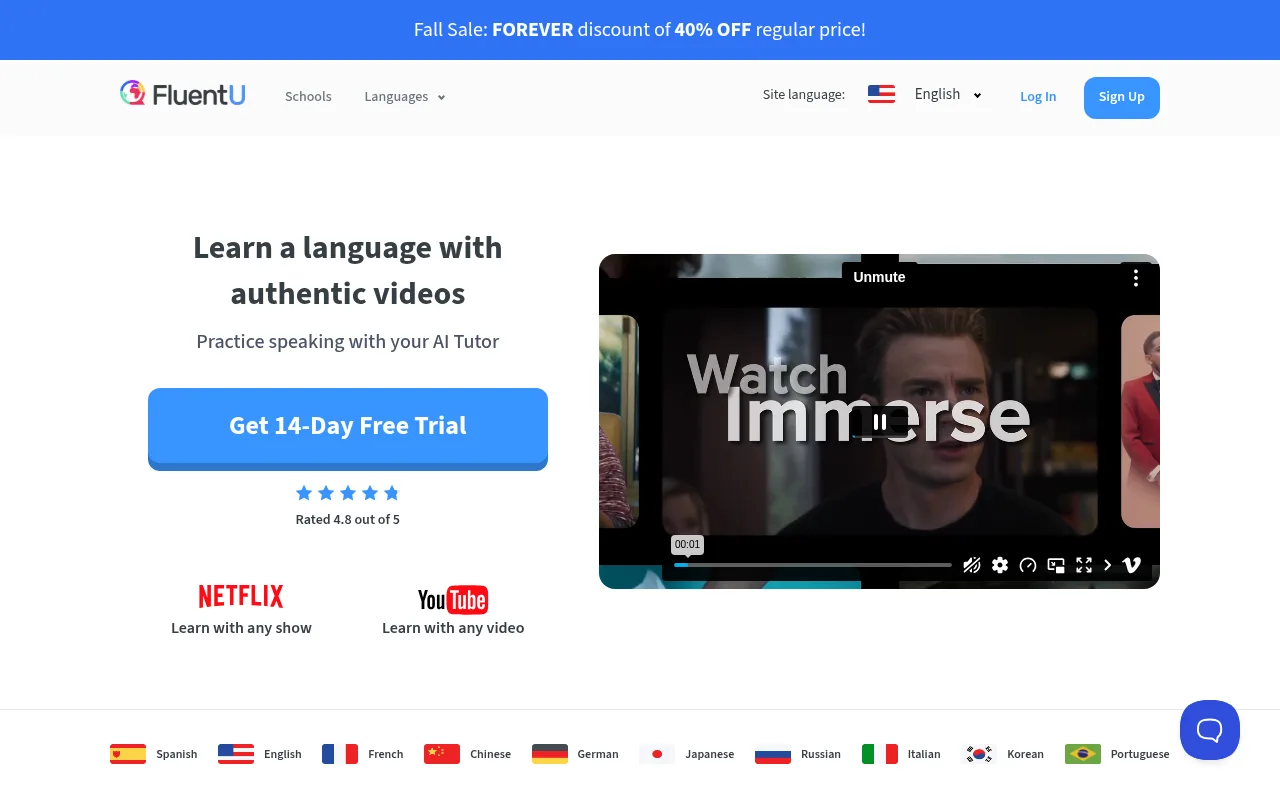
FluentU converts real YouTube clips, movie trailers, and news segments into structured comprehensible input sessions by overlaying definitions and example sentences directly onto the video as it plays. The hover-vocabulary feature is the sharpest tool here: pause on any word mid-clip and get instant context without leaving the screen. The honest limitation is cost. At its standard monthly rate, meaningfully higher than most free alternatives, it is a commitment best justified when you are actively building vocabulary from real video content rather than watching passively.
3. The Comprehensible Input Principle (i+1) - Why Real Content at the Right Difficulty Beats Scripted Audio
Stephen Krashen's comprehensible input hypothesis argues that language acquisition happens fastest when learners encounter material they can mostly understand, plus a small amount of new language, the 'i+1' zone. Scripted ESL audio is often too controlled and artificial to trigger genuine acquisition, while unfiltered native content can be too dense. Choosing real-world English content calibrated just above your current level, through tools like FluentU or TED, is the practical application of this principle.
4. BBC Learning English - Best Free Source of News-Based Authentic Listening at Graded Levels
BBC Learning English reaches an enormous global learner base each month, which signals something beyond brand recognition: the content works at scale across proficiency levels. The site organizes audio and video by level, topic, and accent (British English throughout), making it the most structured free option for learners who want real news content without the difficulty cliff of raw BBC broadcasts. The limitation worth naming: the content skews toward formal, broadcast English, so it builds comprehension for professional and academic contexts faster than it builds ear for casual conversational speech.
Most learners treat authentic listening practice as a sit-down activity, something that requires a screen, a quiet room, and twenty minutes they rarely have. When real input requires a dedicated session, busy schedules win and the practice disappears. Parrot is most beneficial when a learner needs to improve real-world listening comprehension, not just textbook-based skills, and its short-form video feed addresses the scheduling problem directly.
Each clip delivers a short burst of native speech, calibrated to your level by a placement test taken at the start, with content selection and sequencing governed by the Comprehensible Input Method underlying every session. The comprehensible input principle does not require a desk. It requires the right content at the right moment, and Parrot is built to deliver that in a commute or a lunch queue.
For learners who want to push beyond passive watching, speaking activities with pronunciation scoring are built into the listening experience. Parrot scores pronunciation with proprietary models it built and trained. Listening comes first; speaking is about 20% of the experience.
Real-world content tunes your ear to authentic English at natural speed and rhythm. But for learners who need a consistent pull to return each day, passive listening alone rarely builds the habit. The next section covers the gamified platforms engineered specifically to make daily practice feel less like studying and more like a game you actually want to open.
Best Websites for Bite-Sized Gamified English Practice That Actually Sticks
Understanding exactly what each platform delivers, and where it stops, is the difference between a 90-day streak that compounds into real conversation ability and one that flatlines at the vocabulary-recognition ceiling.

Duolingo and BBC Learning English - What the All-Rounders Do Well and Where They Stop
Bite-sized, gamified English practice works best for vocabulary exposure and reading comprehension. Both Duolingo and BBC Learning English serve that function well, and at genuine scale: BBC Learning English reaches an enormous global learner base across its free audio, video, and grammar resources, making it one of the most credible free picks for ESL learners at any level.
The Duolingo Language Report 2023 highlights daily engagement and streak maintenance as core success metrics. That design philosophy serves beginners who need structure and motivation to build a habit, and it delivers on that for millions of users. The gap opens for learners whose goal has shifted to communicative fluency: optimising for engagement and optimising for spontaneous production are separate objectives, and understanding that distinction helps learners decide when to supplement or graduate from a gamified platform.
The Gamification Ceiling - Why Streaks Measure Habit but Not Fluency
Research published in Jurnal Pendidikan Bahasa Inggris (Hamma, Nur, Ammade & Latifa, 2025) concludes that gamified apps paired with self-directed learning represent an "innovative pathway to fluency," implying the app alone is structurally insufficient. The reason traces back to Stephen Krashen's comprehensible input research: the brain acquires language through meaningful, slightly challenging real-language exposure, not through drills calibrated to keep completion rates high.
Where Parrot becomes most powerful is when immersive video is paired with active practice, bridging precisely that gap between passive recognition and spontaneous production.
Related Reading
Best Apps For Learning English Pronunciation
Best Tv Shows To Learn English
Best Books To Learn English Grammar
English Pronunciation Exercises
Best Audiobooks To Learn English
Best Movies For Learning English
Best Books For Learning English
Best Youtube Channels To Learn English
Best Apps To Improve English Speaking Skills
The One Type of English Learning Website Nobody on These Lists Recommends Yet
The Hidden Architecture Problem No "Best Sites" List Solves
That time already exists in most learners' days, and research on Krashen's Input Hypothesis confirms that acquisition happens incidentally when learners encounter meaningful, context-rich language in use, not during scheduled grammar sessions.

None of the platforms ranked in this list were built around a TikTok-style feed sequenced by comprehensible input principles. Parrot is built on exactly that architecture: a short-form video feed of native speakers delivering real English in real context, ordered by comprehensible input logic rather than algorithmic engagement.
Next steps
If your streaks keep climbing while real conversations still freeze you mid-sentence, the path forward starts with recognizing that gamified platforms optimize for daily retention, not spoken fluency, and the input format has to change before the outcome can. Start with our learn Spanish.
Gamified streaks are a retention mechanism dressed up as a learning mechanism, which means every comfortable drill session is producing recognition, not production. At the same time, the most efficient acquisition happens when comprehensible, emotionally engaging input fills the scroll time you already have, converting otherwise passive attention into fluency gains rather than competing with your day for a separate study block. Together, those two realities point to one practical move: replace the drill loop with a short-form video feed sequenced by comprehensible input logic, where each session builds both listening and speaking rather than rewarding you for showing up.
Start with Parrot. A placement test calibrates your starting level, the AI tutor layers in personalized feedback, and the Parrot Back feature adds the speaking output that passive input alone cannot build. A 7-day free trial with full Premium access covers everything before you commit.
Frequently Asked Questions
Why doesn't using Duolingo every day lead to being able to hold a real conversation?
Duolingo's streak system measures consistency with the platform, not whether your brain can retrieve language under pressure in real time with another person waiting. It excels at vocabulary and translation practice, but real-life conversation requires comprehensible input delivered in authentic context, a fundamentally different architecture than isolated drills.
Is BBC Learning English actually worth using as a free resource?
Yes, particularly for learners who want British English grounded in real news, the 6 Minute English podcast is a strong example of comprehensible input that fits a commute. The trade-off is that it builds no speaking habit on its own, so it works best when paired with something that requires you to produce language.
What's the fastest way to actually make progress in English when I only have short windows of time each day?
The key is choosing a platform that delivers meaningful, comprehensible input slightly above your current level, what researchers call the i+1 principle, inside the fragmented windows you already have, like a commute or lunch break. Platforms that only work inside a 25-minute structured session fail most busy learners structurally, before effort or motivation ever becomes a factor.
Should I pay for an English learning platform, or is free good enough?
Free platforms can carry a learner surprisingly far at beginner level (A1–A2), but free tiers typically cap output practice and personalization. If you are above A2 and your goal is conversational fluency rather than reading comprehension, paying for adaptive difficulty and structured speaking feedback is usually worth it.
How do I know which English learning platform is the right level for me?
A free CEFR placement test takes under fifteen minutes and immediately narrows which platform type is worth your time. Most adult learners globally sit between A2 and B1, where A1–A2 learners need high-frequency vocabulary in clear context, B1–B2 learners need authentic input with scaffolding, and C1–C2 learners need volume and variety rather than structured lessons.